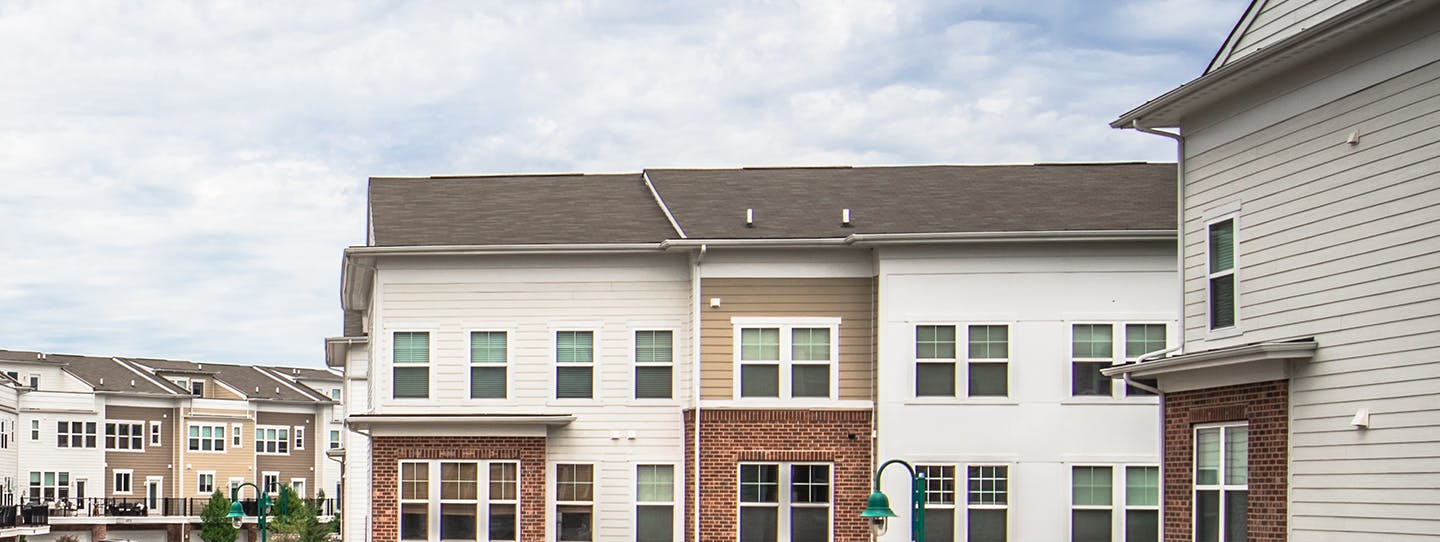

Every year the Princeton Review publishes its much ballyhooed list of the best party schools within the United States. Obviously, we here aren’t exactly hunting for schools at the moment, but we are interested in real estate, and there is rarely little, if anything said about the areas where these party schools are found. And so, without further ado, we’re giving you a little tidbit about the so-called best party college towns. (more…)
Author Archive
Most Densely Populated Places Outside the US

photo credit: James Cridland
Population. You might not think it’s interesting, but “population density” ?That’s a different story. Why? Because whether it be culture, geography, or even a gimmick, there is usually some specific reason why people cram themselves into certain locations. Below we’ve listed just a few of the most densely populated cities on earth outside of the United States. Some are obvious, yet some may be a surprise. Enjoy!
Manila

photo credit: Oscar Papaorhum
The most densely populated city on earth, Manila, the capital of the Philippines. That’s right. The Philippines. With all of the stink made these days over how crammed India is, in the end, it’s the Philippines that still holds the title. The city of Manila boasts an average population density of 111,576 people per square mile. For those who enjoy the rural, open, outdoors, I think we’ve just found your veritable hell. You think that’s bad? Keep in mind, that number is an average. The most densely populated area within the city itself is District 6. The density there … 176,811 people per square mile.
Bogor
If the world’s most densely populated city is in the Philippines, then the second most densely populated city must be in India… Right? Nope. The city laying claim to that title is Bogor, and it’s located in Indonesia. Bogor was the capital of Indonesia throughout parts of its history. Today though, Bogor is a major agricultural center, a role that ties back to the cities colonial history when it was primarily comprised of plantations. So just how dense is Bogor? 104,037 people per square mile.
Titagarh

photo credit: mckaysavage
And so here we are, finally, at number three. The third most densely populated city in the world it Titagarh, in India. And what is Titagarh? Is it the crowded slums of Mumbai, as seen in “Slumdog Millionaire” Nope. Not even close. Titagarh is a city of migrant workers… lots of them. Up to 90% of the population, at times, is comprised of migrant workers brought in to serve as the labor force for Titagarh’s jute mills. And what is jute? A type of cloth made from the jute plant. The population density of Titagarh is 99,293 people per square mile.
Levallois-Perret

Going down the list at this point, six out of eight of the next most densely populated cities are located in India (so this is where it gets its fame). The other two, are in the Philippines. Finally, at number 12, we find a new county. And to give this list some variety, we’re going to jump straight to it. France. Levallois-Perret is a suburb of Paris, and as we’ve already suggested, the most densely populated municipality in all of Europe. 67,984 people can be found per square mile in this area. As it stands, there are no obvious gimmicks as to why this area contains so many people. At last count, 82.5% of the population here were born in Metropolitan France. For whatever reason, this commune is certainly popular.
Neapoli
Number thirteen on the list is Neapoli, Greece. While this location features a population density of 67,027 per square mile, it also has a gimmick. And what is that? Simple… the town is less than half of a square mile in size. Neapoli is the most populated section of Thessaloniki, the second most populated city in Greece. Since this section is its own municipality, it makes the list.
Saint-Josse-ten-Noode

photo credit: glasseyes view
To find a new country that hasn’t been mentioned before on the list, we need to jump down all the way to number 17, where we find Belgium. Saint-Josse-ten-Noode is a municipality within the region of Brussels, Belgium’s capital. As with Neapoli, Saint-Josse-ten-Noode has a gimmick, and it is the same gimmick as Neapoli. Saint-Josse-ten-Noode is less than half of a square mile in size, and is comprised of the most populated area in a very urban region. Suffice to say, Saint-Josse-ten-Noode is not only the most densely populated region of Belgium, it is also the smallest.
Mislata

photo credit: cesarastudillo
Dropping down to number 27 on the list, we find Spain. And once again we find the same gimmick for the third time. Mislata is a suburb of Valencia only 0.8 square miles in size. With its population of 43,756 this gives it a population density of 54,695 per square mile. Despite Mislata’s diminutive size, however, it does feature some open space… but not for long. Recent construction within this open area only promises to increase Mislata’s population density even further.
Paris

photo credit: hipposrunsuperfast.com
Number 30 on the list finally gives us another true city that is not on the list for its diminutive size. Paris, France, the city of love. The capital city of France can boast a population density of 54,415 people per square mile. This, of course, also makes it the most densely populated full metropolis, let alone capital, in all of Europe. The city’s highest density areas are in the northern and eastern areas.
Dhaka

photo credit: joiseyshowaa
The capital of Bangladesh finds itself at number 34 on our list. The city features a population density of 50,368 people per square mile. Not only that, it is currently one of the fastest growing cities in Asia. There are currently just under 13 million people living in and around Dhaka. By 2025 it is estimated this number will double. So, why is that? Immigration. Dhaka is extremely popular with members of the rural population who want to move to the big cities.
There’s definitely a less to be learned here. If you want to be one of the most densely populated places on Earth, take a well populated urban area, then simply declare the most densely populated portion of it as an independent municipality. Presto! You’re in the record books. That said, there is a plus side to this. With so many entries requiring a gimmick to make this list, it only makes the legitimate cities, like Manila, that much more impressive.
Most Photographed Places in NYC
New York City – Typically a list like this is an educated guess. But nope, not this time. Cornell University recently did a study using a super-computer with the Flickr online photography service. Putting them together, Cornell was able to calculate once and for all the most photographed places on Earth. New York, as it turns out, is the most photographed city. Below, you?ll find a list of its most photographed locations. (more…)
Best Places to Visit in San Diego
When one thinks of Southern California one probably think of Los Angeles, or even Orange County. But what would you get if you were to make a hybrid of the two? The answer is San Diego, a big city that’s not quite as urban as Los Angeles, nor as suburban as Orange County. San Diego is a city of parks, and a “best kept secret” for many international tourists. It hosts one of the most famous conventions in the world, let alone some of the most famous zoos. There are countless reasons to visit San Diego, let alone sites to see. Below you’ll find just a few of them. (more…)
Historic Places in San Antonio
San Antonio, tourist capital of Texas. And why shouldn’t it be? San Antonio has one of the deepest, richest histories in the Lone Star state. It’s the third largest city in Texas, and for the past decade has been one of the fastest growing areas in the entire United States. The area was originally populated by American Indians until June 13th, 1691 when a Spanish expedition arrived. June 13th, as it turned out, was the feast day of Saint Anthony, which is how the city got its name. The city is home to a number of historic sites, below are just a few of them.

photo credit: Stinkie Pinkie
It started as a mission, like the one the swallows fly to in San Juan Capistrano. Today though It is the embodiment of a battle. The Mission San Antonio de Valero, as it was known, was built in the 18th century for the same purpose of all Spanish Missions, to assist with the education and conversion to Christianity of American Indians. Around 1793, the mission was secularized and abandoned. A decade later, it would become a military fortress for the Mexican army. In December of 1835, the Texians would seize it. The Mexican army’s retaking of the fortress a few months later would come to be known as the Battle of the Alamo in which a number of American legends, such as Davy Crockett, would die defending the fortress despite eminent defeat.
When it comes to Cathedrals and history in the United States, you would be hard pressed to do better than the Cathedral of San Fernando. Why? One simple reason. This is the oldest cathedral in the United States. The original church at this location was completed in 1750; the cathedral standing today uses the walls of that church to form its sanctuary. The cathedral played a notable role during the Battle of the Alamo as it was from atop this church that the Mexican General Santa Anna flew his “no quarter” flag. Today, an enormous $15 million dollar restoration plan is underway.
Named after the first president of the Republic of Texas, “Fort Sam” as it’s colloquially known was built in the 1870′s. Suffice it to say, it is one of the oldest installations still used by the United States Army today. Since the Fort has continues to develop over the past 200+ years, it offers a vivid picture of how building design has evolved within the US military. The oldest structure at Fort Sam is the “Fort Sam Houston Quadrangle”. Geronimo himself was held prisoner here when he was captured by the army. Eisenhower was posted at Fort Sam when the attack on Pearl Harbor occurred. The first home he lived in with his wife is a well known building within the fort.
Possibly constructed as early as 1722, the Spanish Governor’s Palace actually isn’t so much a palace as a reasonable house containing 10 rooms and a courtyard. Also, this wasn?t the home of the Spanish Governor; it was the home of the local presidio captain. The building was built at this location to protect the nearby Alamo and the surrounding community. It would also later be used as the capitol building for the Tejas region of Spanish Texas. Today, the building serves as a museum and is a prime example of the Spanish Colonial style of architecture and decoration used at the time.
King William Historic District

photo credit: ChicagoGeek
If you’re looking for old fashioned architecture, this is the place to go. It is the oldest historic district in the state of Texas. Covering an area of 25 blocks, the neighborhood consists of numerous homes built in the late 1800′s by prominent German merchants who had settled in the area. The ?King William? name actually refers to King Wilhelm I, who was King of Prussia at the time. Among the San Antonio natives, the neighborhood came to be known as “Sauerkraut Bend”. Today, the neighborhood is a desirable place to live, as well as a popular walking-tour destination.

photo credit: HeatedGroundPhotography
If you’re a fan of the Seattle Space Needle, then this is the place for you. The tower was built for the 1968 World’s Fair and looms 750 feet over San Antonio. (The Seattle Space Needle is only 605 feet.) The Tower of the Americas was the tallest observation tower in the United States until 1996. At the top of the tower is an observation tower and a restaurant. These days, that restaurant is part of the Chart House chain. The tower is open year round.

photo credit: devilelephant
Since we’re discussing historic sites, at least one of them should be a site of “natural” history. And when it comes to natural history and San Antonio, nothing fits the bill better than the Natural Bridge Caverns. These are the largest known commercial caverns in the entire Lone Star State. The caverns stretch for miles, but equally amazing, these caverns weren?t discovered in modern times until 1960. How old are the caverns? When excavation of the entrance began, arrowheads and spearheads dating back 7000 years were found, and those weren?t the oldest items. The femur and jawbone of a bear that went extinct 8000 years ago were also found. Today, tours are offered year round at this amazing site.
San Antonio is an eclectic city with a history covering multiple eras. The American Indians, Spanish, and early Mexicans have all made their mark on the city’s origin, not to mention the Texians who founded the Republic of Texas. It is also a city steeped with military lore. It goes without doubt, San Antonio will continue to play it’s part in the Lone Star State’s great history for many centuries to come.
Historic Sites in New Orleans
New Orleans… it’s been in the news a bit recently. Beginning with Hurricane Katrina, the national spotlight turned on the city as it never had before. And with the Saints winning the Super-Bowl, the nation’s attention is again on New Orleans. And then there’s the vampires. Good god, the vampires. It started with Anne Rice and her “Interview with the Vampire”. Today it continues with Charlaine Harris’s Sookie Stackhouse novels, or as they?re more widely known, the basis for HBO?s “True Blood”, in which New Orleans is veritable Mecca for the undead. No matter how you look at it though, New Orleans is an exotic city and even arguably the most unique in the United States.
Bourbon Street
Back when New Orleans was founded, the center of the city was its French Quarter. Today, the city has expanded, but the French Quarter is still the heart of New Orleans culture. Bourbon Street runs straight through this quarter. Largely quiet during the day, the street comes to life at night with its many bars, restaurants and strip clubs. The party of all parties is, of course, Mardi Gras. Bourbon Street is also home to the Cafe-Lafitte-In-Exile, the oldest gay bar within the United States. As it is with many famous streets, once you leave the touristy areas, Bourbon street becomes a street like any other with a quaint residential area and shops established to serve the locals.
Garden District

photo credit: *clairity*
Initially, this area was home to a number of plantations built by Americans who had no interest in living among the creoles who called the French Quarter home. The neighborhood came to be known as the “Garden District” because of the vast, beautiful gardens surrounding the plantation mansions. Since the late 1800′s however, those plantations were subdivided and smaller Victorian homes were built in their place, leaving only the mansion itself intact. The neighborhood is now known more for its astounding architecture.
Longue Vue House and Gardens
Originally there was a house here owned by Mr. and Mrs. Edgar Bloom Stern. In 1934, however, work began on landscaping the grounds with several beautiful gardens. The Sterns decided their home did not allow them to fully enjoy their new grounds, so their original house was moved and a new one constructed in its place with three stories and twenty rooms. The new house is unique. Each of its four facades bears a different appearance to match the garden on that side of the house. Though damaged during Hurricane Katrina, the house and gardens have since been repaired. The home is open daily for tours.
Pontchartrain Hotel
Opened in 1927, this historic hotel has been a mainstay in New Orleans for over 80 years. An earlier hotel existed on this site as far back as 1825. Since opening, the hotel has had a number of notable guests including George H. Bush, and Tennessee Williams who worked on his famous play “Streetcar Named Desire” while staying there. The hotel closed for extensive renovations in July, 2007, and will now serve as a home for retirees with the rooms being converted into senior apartments.
Saint Louis Cemetery #1
There are three St. Louis Cemeteries. This one is the oldest. Founded in 1789, when it was the main burial ground for the city, it is still functioning today. With that in mind, one might picture expansive grounds. Saint Louis Cemetery #1, however, is only the size of one city block. Despite that, over 100,000 dead have been interred here. The graves in each Saint Louis Cemetery are above-ground vaults. This is due to cultural tradition, not New Orleans water table. Tours of the cemetery are available.
St. Louis Cathedral
This is, simply put, the oldest continuously operating cathedral in the United States. So how old is it? The first church on this site was constructed in 1718. The church has been rebuilt from scratch three times, the most recent in 1789. The current church was in turn largely expanded and rebuilt itself in 1850. And while we’re inundating you with dates, the church was upgraded to cathedral rank in 1793 and designated as a minor basilica in 1964. Surprisingly, this is not the largest nor grandest church in New Orleans. That said, it is obviously the most historic, which is why it is the seat of the Roman Catholic Archdiocese of New Orleans.
The Cabildo
Adjacent to St. Louis Cathedral stands The Cabildo. This beautiful building was the seat of local government during New Orleans colonial era. As with much of New Orleans, the original building burnt down during the great fire of 1788. Since being rebuilt, it has served several purposes, especially as a courthouse. This building was also the site of the Louisiana Purchase ceremonies in 1803. In 1895, it was suggested the building be demolished as it had fallen into disrepair. Fortunately, the building was ultimately saved through the efforts of artist William Woodward. Since 1911, the building has partially housed the Louisiana State Museum.
The Presbytere

photo credit: sfmission.com
Also adjacent to St. Louis Cathedral, The Presbytere was originally constructed by the cathedral to house members of the clergy. However, it was never used for this purpose. The building was first used for commercial purposes, then by the Louisiana Supreme Court as a courthouse. Today, it partially houses the Louisiana State Museum. The Presbytere obviously shares much of its history with The Cabildo, which is fitting since the Presbytere was originally designed to match The Cabildo in order to better frame St. Louis Cathedral.
A poll by CNN in 2007 found New Orleans to be the top city in the United States for nightlife, live music, cheap food, antique markets, flea shopping, wild weekends, cocktail hours, and girlfriend getaways. Suffice to say, if you strip away the attention the city has gained due to the hurricane, Super Bowl, and vampire lore, you’re still left with a lively and unique city. Granted, it also ranked dead last when it comes to safety and cleanliness, so perhaps it’d be best to leave the kids at home.
World’s Most Awesome Tunnels
Ah, tunnels. And why would you want to read an article about tunnels? Because they?re awesome, that?s why. Forget buildings, forget bridges, heck forget dams. Tunnels are one of the few common feats of engineering that consistently skirts the realm of science fiction. To bore straight through the alps? How about an undersea route connecting England to the rest of mainland Europe? It’s easy to imagine such things being found within the pages of a Jules Verne or H.G. Wells novel. Today, they are realities with countless people routinely using them every day. Now sure, not all tunnels are exciting, but below we’ve listed a few of the most notable tunnels being used and built today. (more…)
Gangsters & Speakeasies: Buildings of Historic Chicago
Chicago, the windy city. Up to just a few decades ago, when Los Angeles surpassed it, Chicago was the second largest city in the United States. Suffice to say, the place has quite a history. A century ago, a third of the city, including the entire business district, burnt to the ground in the “Great Chicago Fire of 1871″. But something even greater would happen just 50 years later, an event for which the city is especially known today. That event?? Prohibition. The 1920′s. For many of us today, historic Chicago is the world people like Al Capone and events such as the St. Valentine’s Day Massacre. Many of the buildings from this era no longer survive, but there’s still plenty of history to be found in Chi-Town.
Biograph Theater
It may appear to be just another boring theater. But it’s not. In fact, you possibly saw it in a Johnny Depp Film recently. The Biograph Theater is none other than the place where John Dillinger was gunned down by the FBI. In 1934, on July 22nd, John Dillinger saw the film “Manhattan Melodrama”. Little did he know that the FBI was staked out outside waiting for him. As Dillinger left theater, he spotted the FBI agents and moved to flee, only to be shot several times, ensuring he would never escape again. The Biograph still functions today, although it now hosts live venues. The theater even went through an overhaul in 2006. And yes, the theater portrayed itself in the film “Public Enemies”. It’s facade and neighboring storefronts were redressed to look as they did back in 1934.?
photo credit:?ejojola
Green Mill Jazz Club
The speakeasy, 1920′s icon. When prohibition began, outlawing the sale of alcohol in the United States paved the way for criminals like Al Capone to come to fruition. And if you think prohibition stopped alcohol, well, then… the word naive comes to mind. Alcohol, if anything, was more rampant in the 1920′s. Want to make something that’s already fun even more popular?? Make it taboo. The “speakeasy” was the slang term for an establishment that illegally sold alcohol during these times. Some were seedy bars, others were extravagant nightclubs filled with the rich and famous. The Green Mill Jazz Club, still open today, was a popular speakeasy back during prohibition and at one point even owned by Jack McGurn, a right hand man of Al Capone.?
photo credit:?swanksalot
Chicago Water Tower
This is the second oldest ornamental water tower in the United States, the oldest being in Louisville Kentucky. But this structure is important for a second reason the reaches much, much deeper into the history of Chicago. When the Great Chicago Fire of 1871 burnt down a third of the city, this tower was the only public building in the burnt zone to survive. Today it is the only surviving structure one can still see. This makes the Chicago Water Tower an anchor linking the Chicago of today, to the original Chicago of pre-1871.?
photo credit:?nautical2k
Wrigley Building
Enjoy chewing gum?? Then you’ve probably enjoyed gum made by Wrigley. Wrigley has been around surround, it’s even likely your great grandparents enjoyed Wrigley gum too. The company was founded in Chicago in 1891. The Wrigley Building, located at 400-410 North Michigan is a skyscraper built as the corporate headquarters of the Wrigley Company. It was also the first air conditioned office building in Chicago. Construction began in 1920. The building is comprised of two towers. The 30 story, south tower was completed in April 1921, and the 21 story, north tower in May 1924. Walkways connect the two towers at the ground level, third floor, and fourteenth floor. The taller, south tower features a clock with a face pointing in each direction.?
photo credit:?scmikeburton
Wrigley Field

photo credit: Matt Watts
The Chicago Cubs. The haven’t won the World Series since 1908, but at least they have a great stadium. Originally known as Weeghman Park, the park was built in 1914 over a period of just six weeks. In 1918, William Wrigley Jr. (the same Wrigley as in the “Wrigley Building”) purchased a controlling interest. A few short years later, in 1926, he would rename the park “Wrigley Field”. The stadium is one of the most famous in Major League Baseball. The park has recently gone through several renovations as well as a change in ownership. Further renovations have now been scheduled.
Mount Carmel Cemetery
Some people enjoy visiting cemeteries. If you’re one of those people, and in Chicago, then this is the one for you. This Roman Catholic cemetery, still active today, is home to a number of famous (infamous?) organized crime figures. Sam Giancana, Jack “Machine Gun” McGurn, and most notably Al Capone are buried here. On the more moral side of things, the Bishops and Archbishops of Chicago are also buried here within the “Bishop’s Mausoleum”.?
photo credit:?karla kaulfuss
Lexington Hotel
Although it no longer exists, the former site of the Lexington Hotel is worth a nod as one drives past. Found at the corner of Cermak Road (originally known as 22nd street) and Michigan Avenue, the Lexington served as none other than the headquarters of crime lord Al Capone. The hotel gained more recent notoriety in 1986 when Geraldo Rivera hosted a one time television special, “The Mystery of Al Capone’s Vault”. A vault, once belonging to Al Capone, was found at the long abandoned hotel, and opened for the first time since God knows when on national television. Some 30 million people watched as the safe was opened to reveal… nothing but dirt and some empty bottles. To this day “Al Capone’s Vault” is used as slang for an event that doesn’t live up to its hype. The hotel was torn down in 1995. Found on the site today are the new “Lexington Park Condominiums”.
The historic sites of Chicago are, if anything, eclectic. Whereas some cities may simply boast historic homes and government buildings, Chicago boasts theaters, night clubs, stadiums and nearly every other manner of historic site. Chicago is well worth checking out, and without doubt one of the greatest cities in the United States.
Historic Places in New York City
New York City, it’s one heck of a town. Population-wise, it?s the largest in the United States.? Originally known as “New Amsterdam”, the city became “New York” after the English took over in 1664. From 1785 to 1790 it even served as the capital of the United States.? Today the city is a global capital, playing host to the United Nations. But above all else, New York is an icon, a city unlike any other, which may at least partially explain the sheer amount of nicknames the city has acquired: “The Big Apple”, “The City that Never Sleeps”, or even just “The City”. A unique city by definition is going to have a unique history, and from that unique history we are going to find an abundance of historic buildings and locations. Below are just a few. Were we to even attempt to list all of them, it would require a thick book, probably several. (more…)
Historic Buildings in Miami
Miami, location of the hit TV series “Burn Notice”. And why shouldn’t it be? Since the 1980′s when “Miami Vice” stormed our living rooms, the city has been known for its exciting and exotic jet-setting locales. But beyond the bikinis and fast boats lies a city with a unique history all its own. All one need do is look and they will find a multitude of historic sites and buildings. From race tracks, to mansions worthy of “Scarface”, to even a 900 year old monastery, Miami is a city that has something for everybody. (more…)


Stay Updated on Our News
Follow us on Facebook
Connect with us on Twitter