

on Tue Aug 11 2026
| 7 min. read

Running a homeowners association has never been more complex. From navigating evolving compliance requirements to managing budgets that average $200–$400 nationwide (and exceed $1,000 in some areas), today's HOA boards face challenges that would test even seasoned professionals.
This guide walks you through the decision-making process. You'll learn what HOA management companies actually do, when hiring one makes sense, how to evaluate the costs and benefits, and what to look for when choosing a partner. Whether your board is overwhelmed, growing, or simply exploring options, this article will help you make an informed choice that protects your community's investment and quality of life.
An HOA management company handles the operational side of running your community, allowing the board to focus on governance and strategic decisions. Think of it as a division of labor: the board sets policy, approves budgets, and makes major decisions, while the management company executes those decisions and keeps daily operations running smoothly.
Core responsibilities typically include financial management, vendor coordination, rule enforcement, meeting facilitation, and administrative support. Management companies bring systems, expertise, and accountability to tasks that volunteer boards often handle inconsistently or not at all.
Understanding this association management company vs. HOA board responsibilities distinction is crucial. You're not handing over control; you're delegating execution.
The value lies in professional oversight. While boards retain final authority on all major decisions, management companies provide the infrastructure, knowledge, and day-to-day attention that keeps communities compliant, financially healthy, and well-maintained.
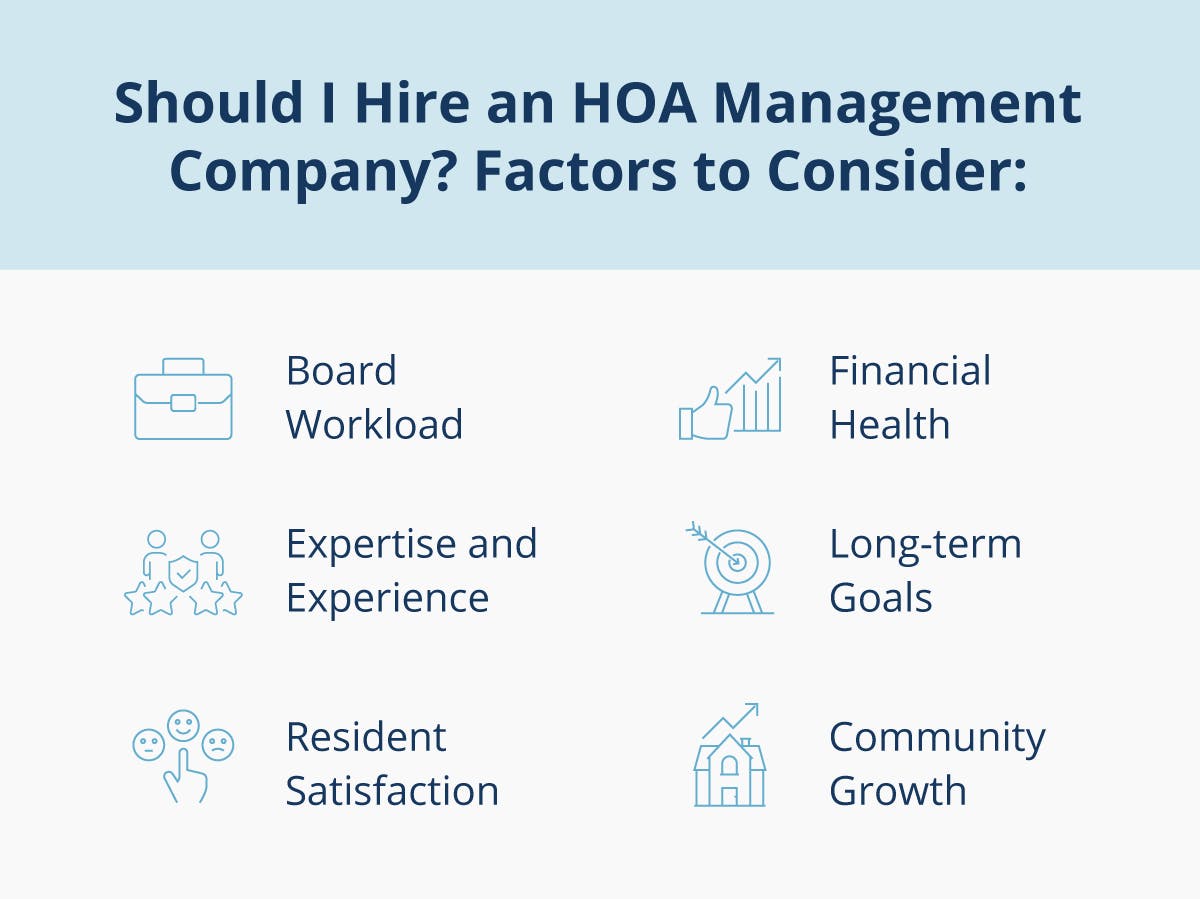
The decision to hire an HOA management company isn't one-size-fits-all. Some communities thrive with volunteer leadership, while others struggle under the weight of operational demands. The key is recognizing when your board has reached the point where professional support will deliver more value than it costs.
Several factors signal that it's time to consider professional management: community size, operational complexity, board burnout, compliance challenges, or financial disorganization.
Certain warning signs indicate that your board has outgrown self-management. If you're seeing missed deadlines, inconsistent communication, volunteer burnout, unresolved disputes, or financial disorganization, it's time to evaluate whether professional help could restore stability.
The 10 signs you should hire new HOA property management framework provides a comprehensive checklist to help boards assess whether they've reached the tipping point. If you're checking multiple boxes, professional management can relieve the pressure and restore your board's ability to focus on strategic leadership rather than daily firefighting.
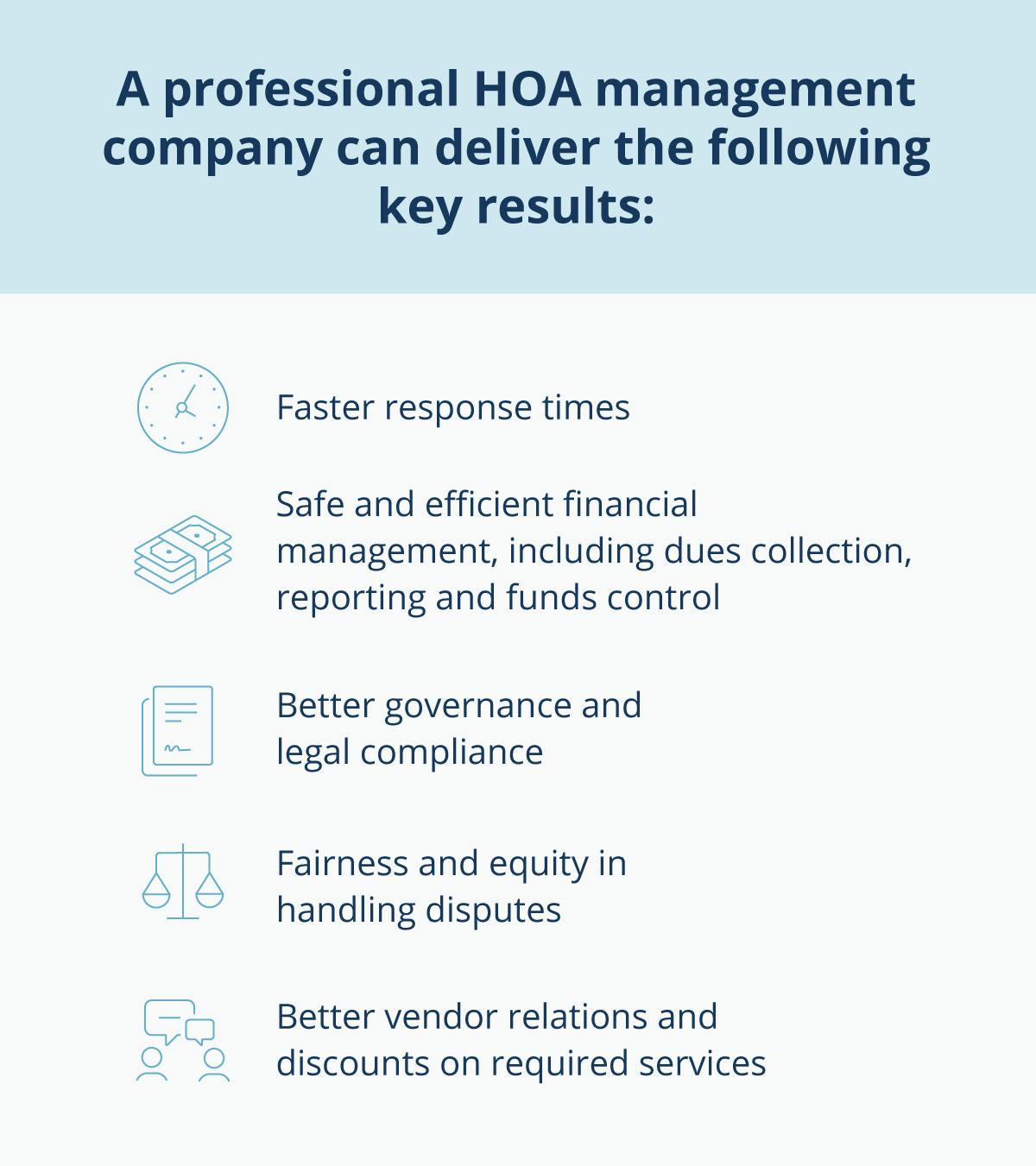
Professional management delivers value across multiple dimensions: time savings, expertise, financial efficiency, legal compliance, and improved homeowner satisfaction. Understanding these benefits helps boards weigh the investment against the return.
Professional management improves quality of life for board members. Instead of spending evenings and weekends handling operational tasks, volunteers can focus on governance and strategic planning. That shift not only makes board service more sustainable but also attracts better candidates willing to serve when the role is manageable.
HOA management companies bring specialized knowledge of HOA law, fair housing regulations, insurance requirements, and local ordinances. This expertise is invaluable in an environment where a single misstep can result in costly lawsuits or regulatory penalties.
The time burden of self-management is significant. Board members often spend 10–20 hours per month on operational tasks, time that could be spent on strategic planning, community engagement, or simply enjoying their own homes. Outsourcing operational tasks to a management company allows board members to focus on governance rather than execution.
The result of professional management is a more effective board. When volunteers can focus on policy, planning, and community vision rather than chasing vendors and processing invoices, they make better decisions and provide stronger leadership. That shift benefits the entire community.
Hiring an HOA management company is an added expense, but it's important to frame it as an investment rather than a cost. Professional management can reduce long-term expenses through better vendor negotiations, financial oversight, and risk management, often offsetting the monthly fee.
For detailed pricing guidance, review our comprehensive breakdown of HOA management fees and what they cover. Understanding what's included in the base fee and what's considered extra helps boards budget accurately and avoid surprises.
When HOA fees can exceed $1,000 in some areas, the financial stakes are high. Professional budget management ensures that homeowner dollars are spent wisely, reserves are adequately funded, and financial reporting is transparent. That level of oversight protects your community's financial health and justifies the management fee.
Selecting the right HOA management company requires a structured evaluation process. Start by defining your needs: What services do you need most? What challenges are you trying to solve? What's your budget? Clear answers to these questions will guide your search and help you identify candidates that fit your community's specific requirements.
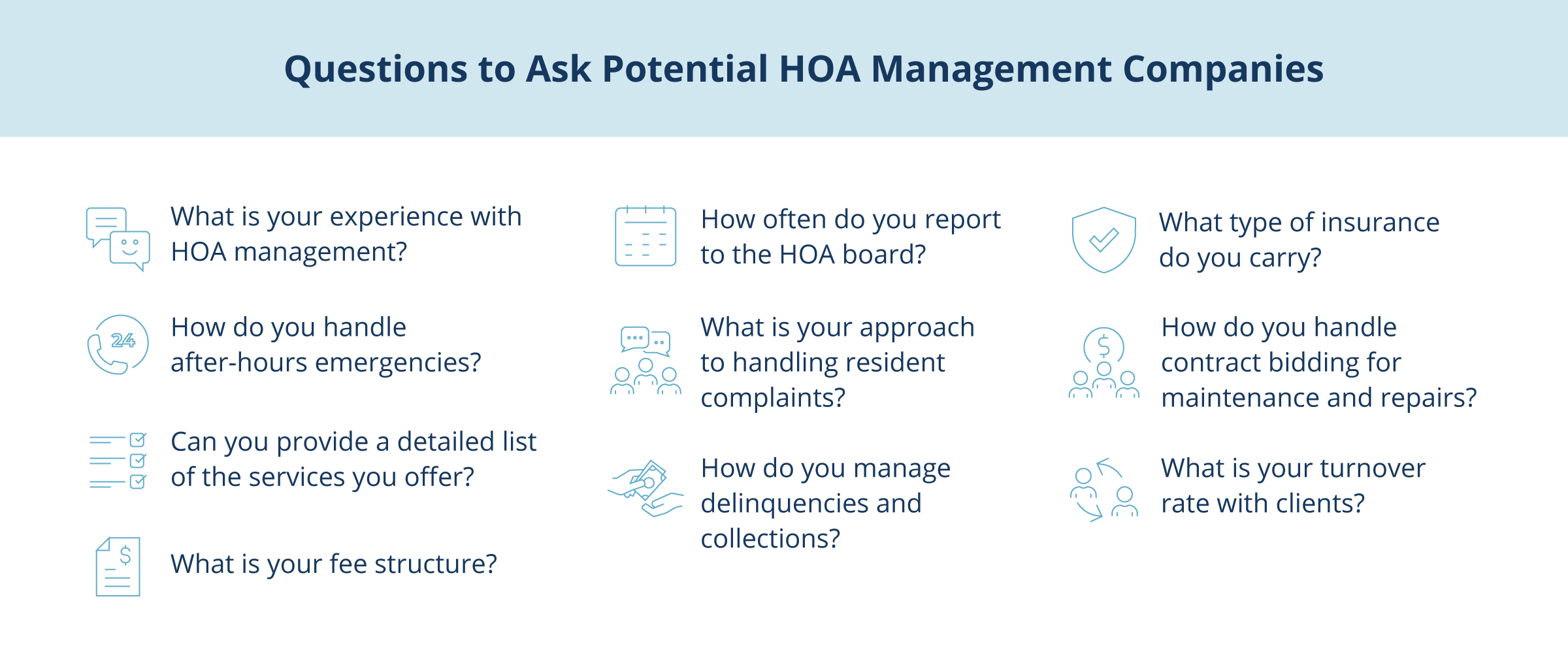
Next, research candidates. Ask neighboring communities for recommendations, search online reviews, and check credentials. Once you've identified 3–5 finalists, conduct thorough interviews, check references, and review contracts carefully. The 8 questions every board should ask when hiring an HOA management company provides a framework for evaluating candidates systematically.
Also consider the skills to look for in an HOA manager when assessing individual manager qualifications alongside company reputation. The person assigned to your community will be your primary point of contact, so their experience, communication style, and problem-solving abilities matter enormously.
Essential questions to ask during interviews include: What services are included in your base fee? How do you handle emergencies? What technology do you use for financial reporting and homeowner communication? How often will we meet? What's your termination policy?
Also ask for client references and examples of how the company has handled challenges similar to yours. If your community struggles with delinquencies, ask how they manage collections. If you have extensive amenities, ask about their vendor network and maintenance oversight.
Don't skip the reference check. Speaking with current and former clients provides insights you won't get from a sales pitch. Ask references about responsiveness, transparency, problem-solving, and whether they'd hire the company again. These conversations often reveal red flags or confirm that you've found the right partner.
Onboarding a management company requires careful planning to ensure a smooth transition. Key steps include document handoff, financial account transitions, vendor introductions, and homeowner communication. The more organized your board is during this process, the faster your new management company can deliver value.
Emphasize the importance of clear expectations, regular check-ins, and ongoing evaluation. The first 90 days are critical for establishing a productive working relationship. Schedule frequent meetings during this period to address questions, refine processes, and ensure that the partnership is delivering the value you expected.
If you're switching from one management company to another, our guide on how to change HOA management companies provides detailed steps to minimize disruption and ensure continuity.
Q: Are HOA management companies worth the cost?
A: For most communities, yes. Professional management saves time, reduces legal risk, and often pays for itself through better vendor pricing and financial oversight. Boards should weigh the monthly fee against the value of expertise, compliance, and peace of mind. When you factor in the time board members save and the costly mistakes professional management helps you avoid, the return on investment is typically positive.
Q: What percentage of HOAs use professional management?
A: Approximately 75% of homeowner associations are professionally managed, making it the industry standard rather than the exception. This high adoption rate reflects the growing complexity of HOA operations and the practical benefits professional management delivers.
Q: Can a small HOA benefit from hiring a management company?
A: It depends on complexity, not just size. A small community with extensive amenities, rental restrictions, or legal challenges may benefit more from professional help than a larger but simpler association. Evaluate your operational demands, board capacity, and compliance requirements rather than focusing solely on the number of units.
Q: How do I know if my current HOA management company is doing a good job?
A: Look for clear communication, timely financial reporting, responsive vendor coordination, and homeowner satisfaction. If you're seeing missed deadlines, unresolved issues, or poor transparency, it may be time to evaluate alternatives. Regular performance reviews and open communication with your management company help ensure accountability.
Q: What should I look for in an HOA management contract?
A: Key elements include a clear scope of services, fee structure, termination terms, insurance requirements, and performance expectations. Avoid vague language and ensure the contract protects your board's interests. Have an attorney review the contract before signing to identify any problematic clauses or missing protections.
Q: How long does it take to transition to a new management company?
A: Typically 30–60 days, depending on the complexity of your financials, vendor relationships, and document organization. A well-planned transition minimizes disruption and ensures continuity. Clear communication with homeowners during this period helps manage expectations and maintain confidence in the board's leadership.
Deciding whether to hire an HOA management company is one of the most important decisions your board will make. Professional management offers expertise, efficiency, and peace of mind, but it also represents a significant financial commitment. The key is evaluating your community's specific needs, operational complexity, and board capacity to determine whether professional management will deliver value that justifies the investment.
For boards ready to explore professional management, the next step is comparing qualified candidates. Look for companies with strong local experience, transparent pricing, and a track record of satisfied clients. Prioritize cultural fit, responsiveness, and clear communication over the lowest bid.
If you're interested in finding a property management company near you, try our free property manager search tool today! Our platform connects HOA boards with vetted management companies in your area, making it easy to compare options, request quotes, and find the right partner for your community's needs.